
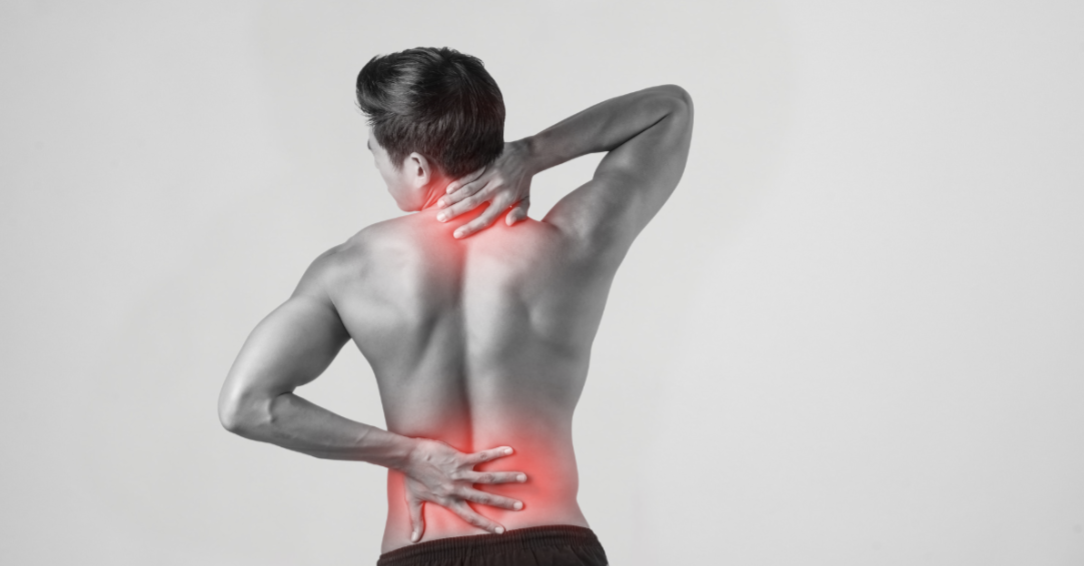
Back pain has become something many of us quietly medicate rather than solve. A couple of painkillers before a long flight. A heat pack at night. A promise to stretch tomorrow. Relief
comes, but the problem stays. Medication masks the signal. It does not change the behaviour that created the pain in the first place.
Movement, when it is intelligent and consistent, works differently. It does not mute the message, it rewrites the pattern that produced it. Classical Pilates is built on this principle. It restores organisation through the spine, retrains muscles that have switched off, and redistributes load so the same areas are no longer asked to do all the work. Understanding which exercises support each part of your back changes everything.
This is not about pushing through discomfort, it is about teaching the body how to support itself again, so pain becomes unnecessary as a warning system rather than something to silence. Read on for exercises to support lasting relief, both in and out of the studio.
For the lower back: Rebuilding your internal support system
Lower back discomfort is often driven by poor pelvic organisation, overworked hip flexors, and a deep core that has lost its reflex to stabilise.
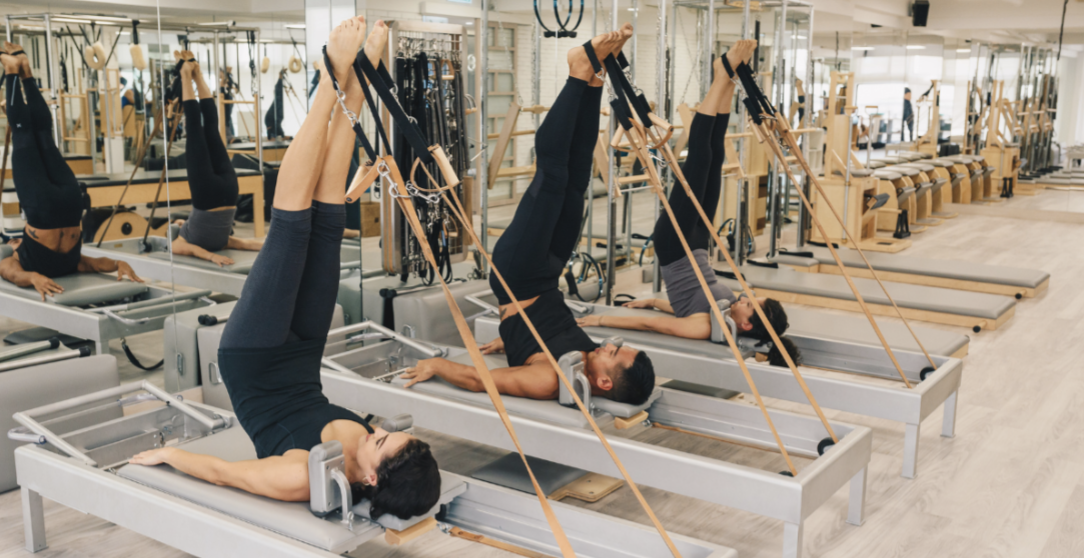
In the studio
- Pelvic Curl: Encourages articulation through the spine one vertebra at a time, helping the body rediscover neutral pelvic alignment while gently strengthening the glutes and deep abdominals that protect the lumbar spine.
- Footwork: Re-teaches the body to generate power from the legs rather than gripping the lower back, improving hip stability and reducing strain through the pelvis and sacrum.
- Short Box Series: Builds controlled abdominal strength while maintaining spinal length, creating the support that allows the lower back to feel light rather than compressed.
At home
- Pelvic tilts lying on your back with slow breath
- Marching legs in tabletop while keeping the pelvis stable
- Five mindful breaths into the ribs before getting out of bed
For the middle back: Releasing rigidity and restoring movement
The thoracic spine is designed to rotate and extend, yet modern life often locks it into flexion. This rigidity is a common cause of that dull ache between the shoulder blades.
In the studio
- Spine Stretch Forward: Restores segmental mobility through the thoracic spine, decompressing the mid back and counteracting the rounded posture created by sitting and screen use.
- Mermaid: Opens the side body and rib cage while improving lateral flexion, which is essential for a spine that can move freely rather than lock into stiffness.
- Short Spine Massage : Creates space between the vertebrae through supported flexion and articulation, encouraging length and fluidity through the centre of the back.
At home
- Seated spine twists with slow controlled breath
- Cat stretch focusing on opening the mid back rather than collapsing the lower spine
- Gentle rotation lying on your side with knees bent
For the upper back and shoulders: Undoing desk posture
Neck and shoulder tension is rarely about weakness. It is usually about overload. When the upper back stops supporting posture, the neck muscles step in and never quite switch off.
In the studio
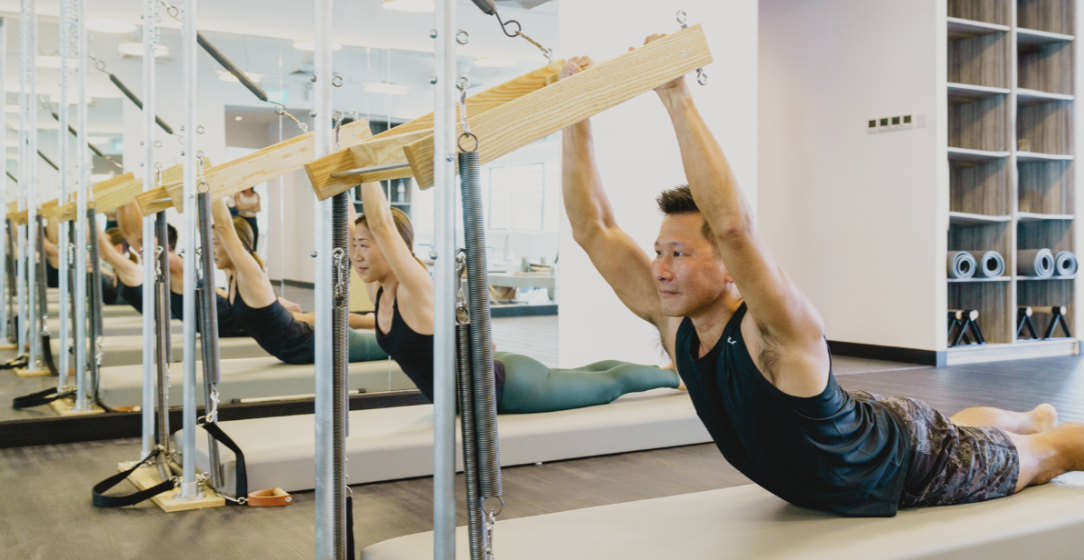
- Arm Springs: Reconnect the arms to the back body so the shoulders stop living in the neck, improving posture without forcing the chest open.
- Pulling Straps: Strengthen the muscles between the shoulder blades in a way that supports upright posture without compressing the cervical spine.
- Chest Expansion: Builds endurance in the postural muscles so the upper back can sustain alignment throughout the day, rather than collapsing under fatigue.
At home
- Shoulder blade glides against a wall
- Arm circles lying on your back with relaxed neck
- Three slow breaths imagining the collarbones widening
Why consistency beats intensity
The nervous system is conservative. It does not change through heroic effort once a month. It changes through repetition, precision, and patience.
The beauty of Classical Pilates is that even small daily practices create lasting change when they are consistent, precise, and supported by thoughtful studio sessions. Even two or three carefully guided sessions a week can begin to rewire the way your body organises itself, reducing pain not because you are stronger in a traditional sense, but because you are moving more intelligently.
Your back is not fragile. It is simply asking to be organised again. It comes from restoring the conversation between the spine, breath, and core so each area does its share of the work.
Struggling with back pain at work, in workouts, or even at rest? Secure your private spine-focused assessment at a Flex Studio near you and get a tailored program designed around your body, not a generic class.
CENTRAL
3/F Man Cheung Building, 15-17 Wyndham Street Central
WhatsApp +852 5740 5103
ONE ISLAND SOUTH
2205 & 2209 One Island South, 2 Heung Yip Road Wong Chuk Hang
WhatsApp +852 5740 9420
ORCHARD
390 ORCHARD ROAD, PALAIS RENAISSANCE #05-02 S238871
WhatsApp +65 9016 3539