
Key Takeaways: Mat Pilates vs Reformer Pilates
- Both Mat and Reformer Pilates build core strength, improve posture, and boost flexibility; neither is universally “better” — it depends on your goals, budget, and access.
- Choose mat Pilates if you want a beginner friendly, low cost way to learn Pilates foundations like neutral spine, core engagement, and breath control.
- Choose reformer Pilates if you want more resistance, exercise variety, and an extra challenge for balance and coordination from the moving carriage.
- New to Pilates? Start with mat to master technique, then add reformer for progression, strength gains, and more targeted full body work.
Both Mat Pilates and Reformer Pilates strengthen your core, improve posture, and offer a low impact way to build muscular endurance, all without your feet pounding the ground. The real question isn’t which is objectively better, but which option fits your body, experience level, and training goals.
What Is Pilates?
Pilates was created by Joseph Hubertus Pilates in the 1920s as a method to stretch, strengthen, and balance the body using precise exercises and focused breathing. It shares some similarities with yoga but leans more into controlled strength and stability work. Today, most people encounter Pilates in two main formats: mat Pilates done on the floor, and reformer Pilates using a spring loaded machine.
Reformer vs. Mat Pilates: Key Differences
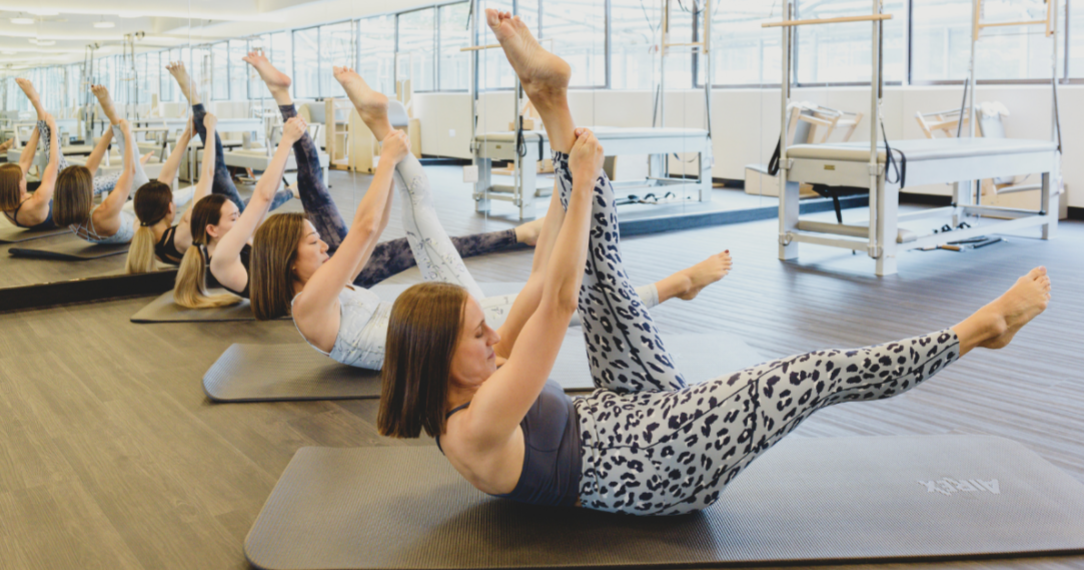
Mat Pilates: the original form closest to Joseph Pilates’ vision, needs just a mat. Heather Thomas of Flex Studio Hong Kong & Singapore says it builds strength, flexibility, and tone via controlled bodyweight moves with core focus.
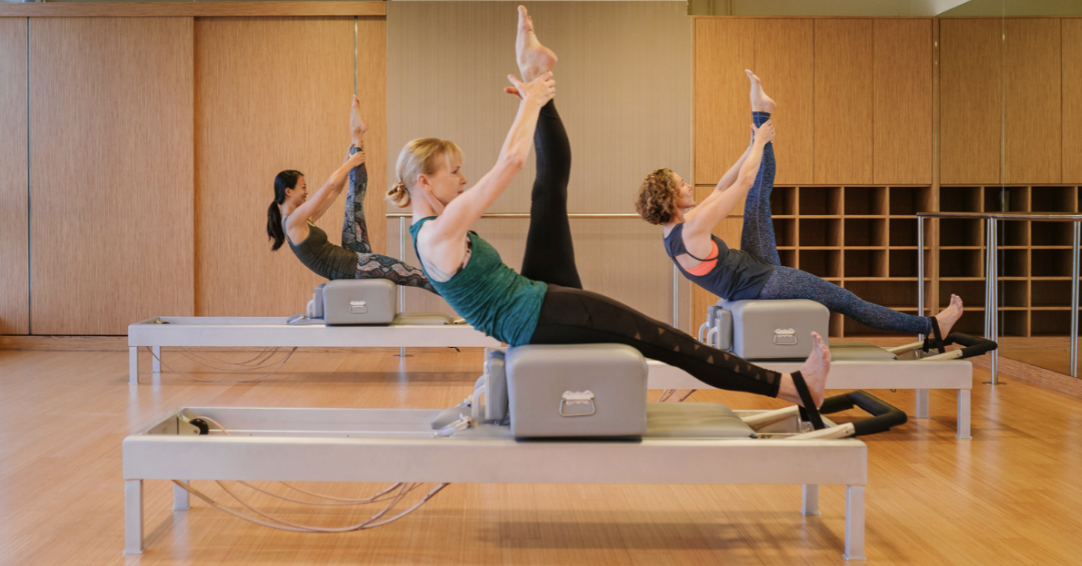
Reformer Pilates uses a machine with sliding carriage, straps, handlebars, and adjustable springs for assisted/resisted full-body work.
In practice: Mat is simple and technique-driven; reformer adds variability and strength-training intensity.
Benefits of Mat Pilates
Mat Pilates is an ideal entry point if you’re new to the method or returning after a break. It strips things back to the essentials so you can focus on how you move, not on managing a machine.
Builds Technique and Form
Mat work forms the foundation of the entire Pilates system. In a mat class you learn essentials such as neutral spine, deep core engagement, and intentional breath work. Mastering these basics on the mat makes it easier to move safely in other workouts — from deadlifts to pushups — and prepares you to get more out of reformer work later.
Improves Posture and Core Strength
Because mat Pilates heavily targets the core with moves like planks, hollow holds, and teasers, many people notice they stand taller and feel more supported through the spine. Research has shown that regular mat sessions (for example, twice weekly for 12 weeks) can improve upper spine and core posture. The deep core muscles, including the transverse abdominis, help stabilize the lower back and keep you upright, which is especially helpful if you spend long hours sitting.
Boosts Flexibility and Body Awareness
Mat Pilates involves continuous lengthening of the muscles, which over time can improve flexibility — useful if touching your toes currently feels out of reach. As Heather notes, regular mat practice promotes flexibility because muscles are repeatedly taken through controlled ranges of motion. The combination of stretching and strength work heightens your awareness of alignment and how your body moves.
Teaches Breath Control and Supports Mental Health
Breath is central in mat Pilates: you’re cued when to inhale and exhale to support and power each movement. Typically, you inhale during the lengthening phase and exhale during the effort, which can help you generate more power and control. This mindful breathing has mental health benefits too, with focused breath work linked to improved mood and reduced anxiety and depression symptoms. A weekly mat class can therefore support both physical and mental wellbeing.
Benefits of Reformer Pilates
Reformer Pilates has become iconic thanks to its distinctive carriage and springs — and for good reason. It offers a highly adaptable, fullbody workout that can be gentle or very challenging, depending on spring settings and exercise selection.
FullBody Strength Training with Resistance
While mat Pilates relies mainly on bodyweight, the reformer’s springs add adjustable resistance, making it closer to traditional strength training. Senior classical Pilates instructor Mirei Lim of Flex Studio Singapore notes that the reformer can train the entire body, from chest and triceps to glutes and legs, with strategic emphasis on specific areas. Because you can sustain tension for longer under load, reformer training can significantly improve muscular strength and endurance, contributing to muscle growth over time.
Challenges Balance and Coordination
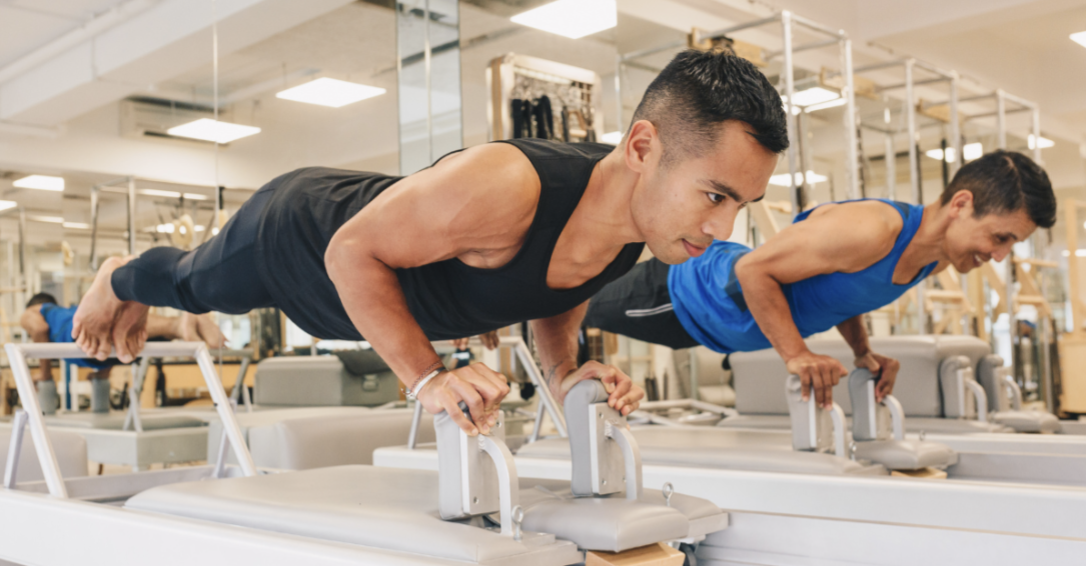
The moving carriage introduces controlled instability, so your muscles must work harder to control each movement. Exercises such as reverse lunges with one foot on the platform and the other on the carriage demand strong balance, coordination, and core stability. As Mirei explains, working on a moving machine heightens your balance and coordination in a way mat work alone may not.
Low Impact with InjuryFriendly Options
Like mat Pilates, reformer sessions are low impact, keeping your feet grounded and reducing joint stress compared to highimpact workouts. The springs can also provide support by limiting how much the carriage moves, adding stability where needed. This can be especially helpful in rehab scenarios — for example, providing more stability around the knee while still strengthening the hamstrings.
Greater Exercise Variety
With platforms, straps, handles, and varying spring settings, the reformer offers a large catalogue of exercises and progressions. This variety lets instructors target different muscle groups and design more rounded, personalised programs, which can keep training engaging over the long term.
How to Choose: Mat vs. Reformer
Beginners, budget-conscious folks, or those wanting portability should start with mat Pilates to master core technique. If you seek resistance, variety, or strength training, reformer is ideal. Many combine both: mat for consistency and form, reformer for progression in strength and balance.
Ready to experience classical Mat or Reformer Pilates with expert instructors? Book a trial class at Flex Studio Hong Kong or Flex Studio Singapore and discover which suits you best!
CENTRAL
3/F Man Cheung Building, 15-17 Wyndham Street Central
WhatsApp +852 5740 5103
ONE ISLAND SOUTH
2205 & 2209 One Island South, 2 Heung Yip Road Wong Chuk Hang
WhatsApp +852 5740 9420
ORCHARD
390 ORCHARD ROAD, PALAIS